
Dental Backlink Mistakes: What to Check Before Taking Action
Toxic backlinks on a dental website need evidence-based review before removal or disavowal; SEOforDentists.au checks link sources, patterns, relevance and risk before recommending action. Our team separates genuinely risky links from weak links that may not require remediation.
What Makes a Backlink Risky for a Dental Website?
A backlink is risky when its source, purpose, relevance or acquisition pattern can undermine trust in a dental website. Search engine guidelines focus on whether links appear natural and useful, not only on the apparent strength of the referring domain.
Link relevance matters because a referring page should make sense in relation to the dental content it links to. Link quality also depends on the page context, editorial purpose, link attribute and signs of a link scheme.
How We Check a Dental Website for Toxic Backlinks
A backlink audit checks the backlink profile, source domains, anchor text, placement and acquisition patterns before we classify a link as harmful. We use evidence from available SEO tools and Google Search Console, then apply manual review to important or unclear links.
Eight Dental Backlink Mistakes to Check Before Taking Action
Backlink mistakes can lead to unnecessary link removal or create new risk during dental SEO work. We review the reason for each link, the evidence behind the concern and the safest available fix.
The mistakes below cover common problems in link building, historical campaigns and backlink remediation.
Mistake: Treating Every Low-Authority Link as Toxic
A low-authority link is not automatically a toxic backlink. A small or modest website may still provide a natural link when the content is relevant and the link helps readers.
This mistake happens when domain authority becomes the only screening factor. The cost is unnecessary outreach, lost referral pathways and time spent removing links that do not show manipulation.
Our fix is to assess link relevance, context, purpose and acquisition history together. We recommend action only when the wider evidence supports a harmful or unnatural link classification.
Mistake: Removing Links Without Checking Their Context
Link context shows whether a backlink supports useful information or exists mainly to manipulate rankings. An editorial link within relevant content can be valuable even when the referring domain is not highly authoritative.
This mistake happens when a link list is reviewed without opening the referring page. The cost can include lost referral traffic, weaker relationships and the removal of a natural backlink.
Our fix is to inspect the referring page, surrounding copy, destination and audience before requesting link removal. We record the reason for any removal decision.
Mistake: Assuming a Commercial Anchor Text Proves Link Spam
Commercial anchor text can raise a review flag, but anchor text alone does not prove link manipulation. Exact-match anchor text may be natural in some contexts, while branded anchor text does not make every link safe.
This mistake happens when one wording pattern is treated as conclusive evidence. The cost is a distorted risk assessment and possible removal of useful links.
Our fix is to review the anchor text alongside page relevance, placement, link attributes, referring domains and the way the link was acquired.
Mistake: Buying Directory Links for Dental Services
A business directory can support discovery when it has a genuine editorial or customer purpose. A paid link becomes risky when the main purpose is to pass ranking signals without meaningful value for users.
This mistake happens when directory placement is purchased in bulk without checking the directory's standards or relevance. The cost may include a larger unnatural link pattern and difficult clean-up work.
Our fix is to assess each dental directory for relevance, moderation, content quality and link attributes. We keep legitimate listings separate from paid link schemes.
Mistake: Using Private Blog Networks to Build Dental Links
A private blog network is a group of sites created or controlled to place links and influence rankings. Signs can include thin content, repeated templates, unrelated topics and a shared pattern of outbound links.
This mistake happens when link volume is prioritised over editorial value. The cost is exposure to a manipulative link scheme and a more difficult backlink history to explain.
Our fix is to identify network patterns and preserve evidence before taking action. We do not treat a single visual clue as proof without reviewing the wider link profile.
Mistake: Creating Irrelevant Guest Posts at Scale
A guest post becomes risky when its content relevance and editorial standards are weak, while the main purpose is to place a backlink. A relevant contribution can be useful when the publisher controls quality and the link fits the article.
This mistake happens when scaled link building produces similar articles across irrelevant domains. The cost is a pattern that may look manufactured and a backlink profile that needs further review.
Our fix is to assess the publisher, article quality, audience fit, link context and disclosure. We focus on genuine editorial value through Link Building.
Mistake: Disavowing Links Before Diagnosing the Problem
Disavowal should follow documented backlink diagnosis, not a reaction to a suspicious-looking link list. The Google Disavow Tool is a technical option for serious link-related concerns that cannot be resolved through other actions.
This mistake happens when a disavow file is created without checking for a manual action, link history or available removal options. The cost is an unclear record of decisions and possible exclusion of links that did not present a serious risk.
Our fix is to review Google Search Console, assess any manual action, document the evidence and decide whether link removal or disavowal is justified.
Mistake: Ignoring Links Created by a Previous SEO Campaign
A historical link-building campaign can explain unusual anchor text, referring domains and changes in a dental website's link profile. Previous work by an SEO agency should be reviewed as part of the site's backlink history.
This mistake happens when the current team lacks campaign records or assumes old links are harmless. The cost is delayed diagnosis and repeated work when the same referral domain or pattern appears again.
Our fix is to match the link profile with available agency records, outreach history and website changes. We separate confirmed campaign links from links that only need monitoring.
Mistake: Removing Valuable Links Without Recording the Decision
A backlink inventory should preserve the source, target, context, risk reason and proposed action for every important decision. A record helps the team explain why a link was retained, removed or disavowed.
This mistake happens when outreach is handled informally or link removal requests are not saved. The cost is lost evidence, repeated contact and uncertainty during a later SEO audit.
Our fix is to maintain a link removal record with outreach history, responses, decisions and supporting screenshots or exports where appropriate.
What to Record Before Removing or Disavowing a Backlink
A backlink review should record the source, target, context, risk reason and proposed action before any link is removed or disavowed. Clear records help prevent repeated analysis and support a consistent remediation plan.
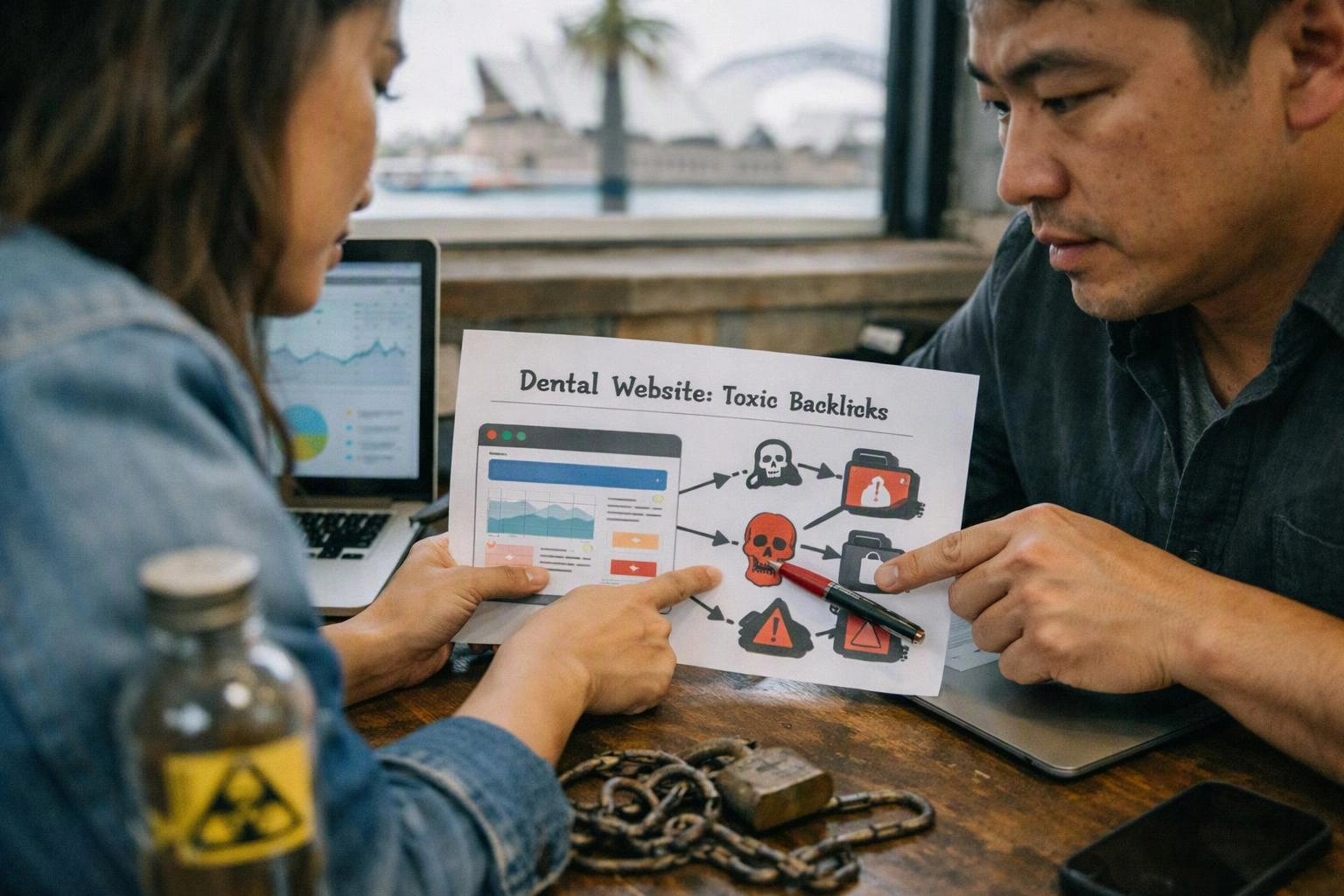
When SEOforDentists.au Should Review the Backlink Profile
Our team should review the backlink profile when link history is unclear, a manual action is present, a large campaign created questionable links or removal decisions could affect valuable referring domains.
Some situations need experienced review because a negative SEO concern can look similar to ordinary growth or legacy marketing activity. An SEO audit can connect link data with search performance, website changes and records from earlier campaigns.
How We Present Backlink Findings and Recommendations
Our SEO audit report explains the evidence behind each recommendation, separates confirmed risks from links that need monitoring and sets out a practical link remediation plan. We organise findings by source, context, likely risk and recommended next step.
We use plain language so you can see why a link was retained, reviewed, removed or considered for disavowal. We provide upfront pricing with Free Estimates Available when discussing this work, with the scope based on the backlink profile and the level of manual review required.
Should You Disavow Toxic Backlinks on a Dental Website?
A dental website should disavow backlinks only when a documented review shows a serious link-related risk that cannot be resolved through other actions.
Disavowal is not a routine response to every spammy backlink or low-quality referring domain. We consider Google Search Console data, any manual action, the link scheme evidence and the available link removal history before recommending a disavow file.
When the evidence does not support serious risk, monitoring and record keeping may be more appropriate. Our team explains the reasoning so the decision remains tied to the backlink profile and its history.
Questions About Dental Backlink Risks
Can spammy backlinks hurt a dental website?
Yes, spammy backlinks can create risk when they form part of an unnatural link pattern or a manipulative link scheme. A single weak link does not establish harm, so we review the source, context, relevance and acquisition history before recommending action.
How can I check whether a backlink is relevant to my dental practice?
You can check whether the referring page serves a related audience, discusses a connected topic and links to a useful target page. You should also review the link context, publisher quality and reason the backlink exists.
What is the difference between a low-quality backlink and a toxic backlink?
A low-quality backlink is weak or unhelpful but may not create a serious risk. A toxic backlink shows stronger evidence of manipulation, an unnatural purpose or a link pattern that may undermine trust.
Can backlinks from unrelated websites affect dental SEO?
Yes, unrelated backlinks can affect dental SEO when they form a repeated or manipulative pattern. An isolated irrelevant link may simply need monitoring, so we assess the full link profile before deciding on remediation.
What evidence should support a backlink disavowal decision?
A disavowal decision should be supported by the backlink URL, referring domain, target page, anchor text, link context, acquisition history and evidence of serious link-related risk. Records of removal requests, manual action details and the proposed disavow file should also support the decision.