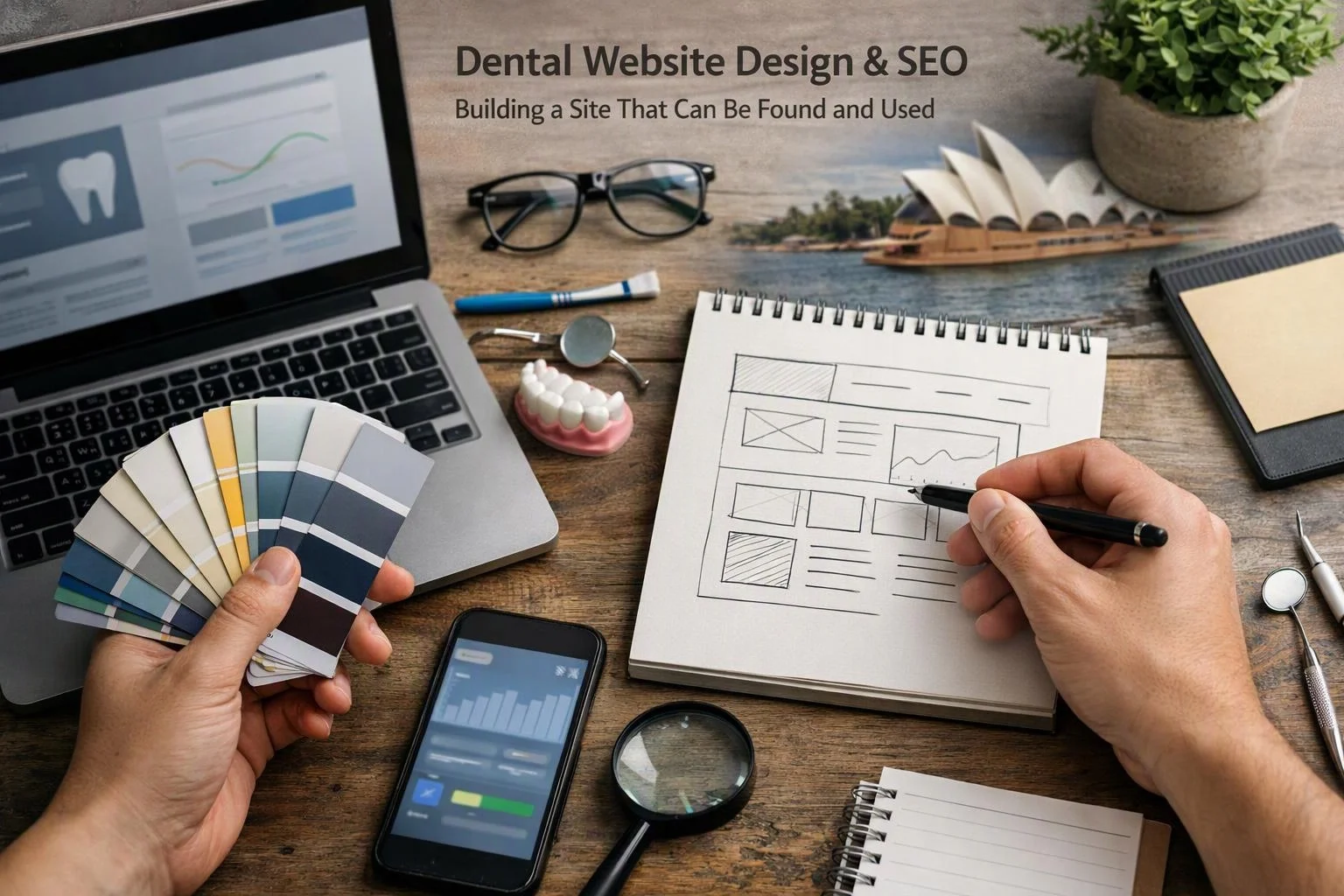
Dental Website Design and SEO: Building a Site That Can Be Found and Used
Dental website design and SEO combine clear patient journeys, useful treatment content and technically sound pages; SEOforDentists.au plans, builds and optimises these elements as one connected system.
How Dental Website Design Affects SEO
Dental website design affects SEO because page structure, usability and technical performance influence how search engines interpret and users engage with dental content.
A dental website needs clear website architecture so search engines can understand the relationship between the homepage, treatment pages and practice information. Good structure also helps users move from an initial search to a suitable next step.
User experience includes readable content, simple navigation and mobile usability. Responsive layouts help pages work across mobile devices, while page speed reduces friction for people who are ready to compare treatments or make an enquiry.
Technical SEO supports crawlability and indexability. We check page metadata, heading structure, image alt text, canonical URLs, XML sitemaps, schema markup and broken links as part of the wider website system.
What a Search-Friendly Dental Website Should Include
A search-friendly dental website should include clear treatment pages, helpful practice information, logical navigation, internal links and accessible enquiry paths.
The homepage should explain the practice and guide users towards relevant treatments. Treatment pages should answer specific patient questions, while the about page can explain the practice approach in clear language.
A contact page should make the enquiry route obvious. Service-area information can help explain where the practice operates when that information is relevant to patients.
Internal linking connects related pages and supports both search engine understanding and patient movement. Structured headings, descriptive page metadata and clear calls to action make content easier to scan and act on.
When Dental Website Design and SEO Need to Work Together
Dental website design and SEO need to work together when the structure, content and patient journey must change as one system. We look for the situations below before recommending a project approach.
These projects often share the same research and planning work. Combining them helps us reduce conflicting decisions about navigation, content hierarchy and page templates.
Why Separate Dental Treatment Pages Matter
Separate dental treatment pages matter because each page can address one treatment intent with focused information, relevant internal links and a clear next step.
A treatment page should match the search intent behind the query. Informational content can explain suitability, preparation and common concerns, while commercial intent may call for clearer service details and an appointment pathway.
Separate pages also make internal linking more useful. A general service overview can link to specific treatments, and each treatment page can guide patients towards related options without blending unrelated topics.
This structure supports patient decision-making because visitors can find the information that matches their concern. It also gives on-page SEO a clear focus for headings, page metadata and content design.
How Dental Website Design and SEO Support Each Other
Dental website design and SEO support each other through shared planning, connected page decisions and consistent testing. Each activity informs the next part of the website.
Cost drivers usually include the existing website condition, the amount of content, design complexity, technical remediation and migration work. We define these requirements before preparing a project scope.
How We Build a Dental Website That Can Be Found and Used
We build a dental website by connecting search research, content structure, responsive design and technical checks from the start. Our process keeps visibility and patient use in view at every stage.
Our team treats the website as one connected system, not as separate design and marketing tasks. That approach helps us find issues that may be missed when content, development and SEO are planned in isolation.
How a Dental Website Turns Visitors into Enquiries
A dental website turns visitors into enquiries by matching useful treatment information with clear navigation, visible contact options and low-friction next steps.
Conversion rate optimisation starts with the patient journey. A visitor should be able to understand the treatment, assess whether it may suit their needs and see what to do next.
An enquiry form should ask for information that supports an appointment enquiry without creating unnecessary effort. A phone link should be easy to use on a mobile device, and each important page should include a clear call to action.
Trust signals include accurate practice information, helpful treatment content and a consistent patient experience. Accessibility also matters because people need to read, navigate and contact the practice using different devices and abilities.
What Changes the Cost of Combining Dental Website Design and SEO?
The cost of combining dental website design and SEO depends on the existing website, required treatment content, technical work, design scope and optimisation depth; SEOforDentists.au can provide Free Estimates Available based on the project requirements.
Website scope is shaped by the number of treatment pages, the content requirements and the complexity of the navigation. Technical remediation may include broken links, indexability issues, page performance problems or migration work.
Design complexity can also affect the work required for templates, responsive layouts, accessibility and conversion paths. SEO strategy adds research, keyword mapping, on-page optimisation and technical review.
Our quote explains the included design, content, development, migration and SEO work. We assess the current site and project requirements before preparing an exact quote.
Common Questions About Dental Website Design and SEO
Dental SEO and website usability address different parts of the same patient journey. The answers below explain how design, treatment content, technical SEO and local search fit together.
Our guidance focuses on practical decisions that affect search engine visibility and patient action. We use the existing website, treatment goals and enquiry journey to decide what needs attention.
Questions About Dental Website Design and SEO
Can a dental website rank well if the design is outdated?
Yes, a dental website can rank with an outdated design when its content and technical foundations remain strong, but poor usability can reduce engagement and enquiries. We review mobile usability, page speed, navigation, accessibility and content structure before deciding whether targeted improvements or a redesign is suitable.
Should every dental treatment have its own website page?
Yes, each important dental treatment should have its own page when patients search for it as a distinct service. A focused page can match the treatment intent, answer relevant questions and provide a clear next step.
What is the difference between dental website design and dental SEO?
Dental website design shapes how the site looks, works and guides patients, while dental SEO improves how search engines understand and display its content. We combine both disciplines so page structure, treatment information and enquiry paths support the same goal.
How does mobile usability affect a dental website?
Mobile usability affects a dental website by shaping how easily patients can read content, navigate treatment pages and make contact on a mobile device. Responsive design, clear buttons, readable layouts and accessible forms reduce friction during the enquiry journey.
What should a dental practice check before redesigning its website?
A dental practice should check its current treatment pages, organic search visibility, website architecture, technical SEO and enquiry journey before redesigning its website. We also review internal links, page metadata, broken links, migration requirements and the content that should be retained or improved.