How Social Media Marketing Can Complement Dental SEO
Dental SEO and social media marketing work together by combining search visibility with audience engagement, while SEOforDentists.au aligns content, branding and measurement across both channels. At SEOforDentists.au, we connect search-led website content with useful social media distribution so dental practices can guide prospective patients from questions to enquiries.
How Dental SEO and Social Media Marketing Work Together
Dental SEO and social media marketing work together by giving dental content both search visibility and audience distribution.
Search engine optimisation helps a dental practice create pages that match patient questions and search intent. Social media platforms then give that website content another way to reach people who may not be searching at that moment.
SEO supports discovery through organic search, while social media supports patient engagement through comments, shares and direct interactions. Together, the channels can strengthen content marketing, brand awareness and the path from website visit to enquiry.
When Dental Practices Need Both Services
Dental practices benefit from both services when search visibility and audience reach need to support the same business goals. We use the following situations to decide where the channels should work together.
What Dental SEO Contributes to Social Media Marketing
Dental SEO gives social media marketing a search-informed content direction that connects posts with relevant patient questions and website pages.
Keyword research shows the language patients use when looking for dental information and services. Search intent then helps us decide whether a topic belongs on a service page, a blog article or a social media post.
Well-planned website content gives social media marketing useful destinations to share. Internal linking also helps visitors move from educational content to related service pages, while organic search continues to provide a separate discovery path.
How the Two Services Support Each Other
Dental SEO and social media marketing support each other through shared content planning and consistent audience messaging. We organise the work around the role each channel plays in the wider content strategy.
We can also connect a service page with related social media content so the audience receives a consistent explanation before reaching the website. Free Estimates Available applies when we scope this work and prepare an exact estimate based on the required services.
How Social Media Promotes Dental Website Content
Social media promotes dental website content by turning useful pages into audience-focused posts that encourage relevant visits and engagement.
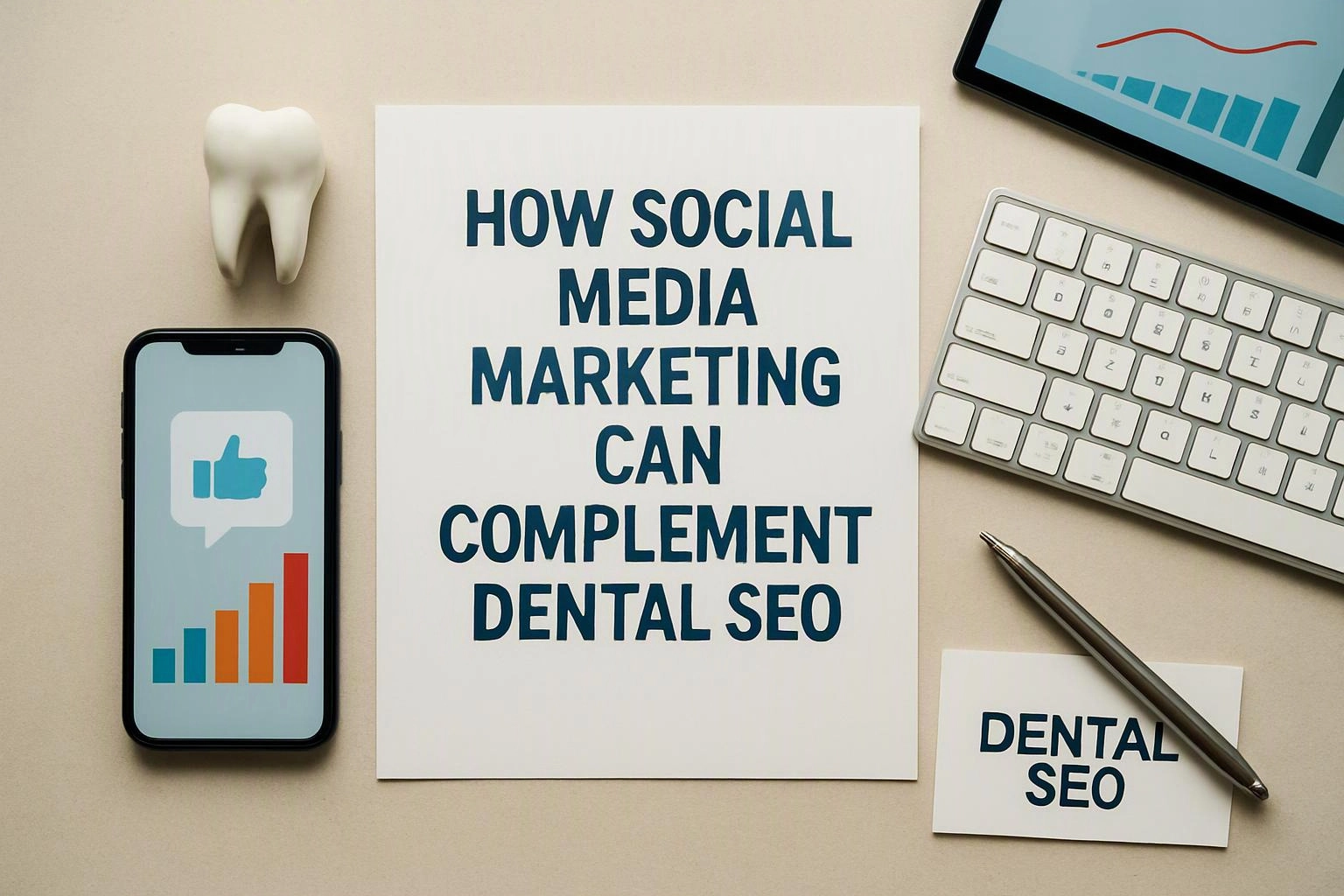
A social media post can introduce a blog article, answer a common patient question or explain why a service page may be useful. The post should offer a clear reason to continue to the dental website without making the social platform carry every detail.
We use content repurposing to adapt patient education into formats suited to different social media platforms. This approach can increase referral traffic while keeping the underlying message aligned with the website and the practice brand voice.
The Difference Between Dental SEO and Social Media Marketing
Dental SEO focuses on discoverability through search engines, while social media marketing focuses on distributing content and building conversations with audiences.
| Area | Dental SEO | Social Media Marketing |
|---|---|---|
| Main focus | Helping relevant pages appear in the search engine results page. | Distributing content and encouraging audience engagement on a social platform. |
| Content path | Search query to website page to conversion path. | Social post to website visit, interaction or further content. |
| Primary strength | Long-term visibility for content that matches search intent. | Audience engagement and ongoing content distribution. |
| Best connection | Search-led pages provide useful destinations. | Social content gives those destinations additional reach. |
These services have different jobs, but they can share the same content calendar and measurement plan. We keep the channel roles clear so social activity supports the website without replacing search-focused work.
How We Align Dental SEO, Social Media and Branding
We align Dental SEO, Social Media Marketing and Dental Branding by connecting research, content production and reporting within one practical workflow.
Our team uses the audit to identify gaps between what patients search for and what the practice currently shares. We then shape the work around the practice’s content needs, channel mix and cost drivers.
How to Measure the Combined Strategy
The combined strategy is measured by connecting search visibility, social engagement, website behaviour and enquiries to shared content goals.
We review organic search visibility alongside social engagement to see whether the content is being found and discussed. Website traffic shows how people move from search or social posts to the dental website, while branded search can indicate stronger recognition over time.
Google Analytics can help us assess the conversion path from content interaction to relevant website action. We interpret these signals together because one channel may introduce a person while another channel supports the eventual enquiry.
Questions About Dental SEO and Social Media
Can social media links improve dental SEO directly?
Social media links do not directly replace dental SEO work, but social media can help distribute website content and increase opportunities for people to discover and discuss the practice.
Which dental website content should be shared on social media?
Dental website content that answers patient questions, explains services or supports patient education is usually suitable for social media promotion when the post gives the audience a clear reason to visit the page.
Should a dental practice prioritise SEO or social media marketing?
A dental practice should prioritise the channel that addresses its current goal, then connect both services when search visibility and audience engagement need to support the same content plan.
How should dental marketing teams connect social media results with website enquiries?
Dental marketing teams should connect social media results with website enquiries by tracking the content path from social post to website behaviour and then reviewing those actions against the shared conversion path.